Car camping completely changed how I travel.
Before my first trip, I assumed camping meant carrying a heavy backpack for miles, sleeping on the hard ground, and giving up basic comforts. Instead, I discovered that car camping lets you enjoy the outdoors while keeping almost everything you need just a few steps away.
You can pack a comfortable mattress, cook real meals, stay organized, and even create a cozy campsite that feels surprisingly like home. It’s one of the easiest and most affordable ways to start camping, especially if you’ve never spent a night outdoors before.
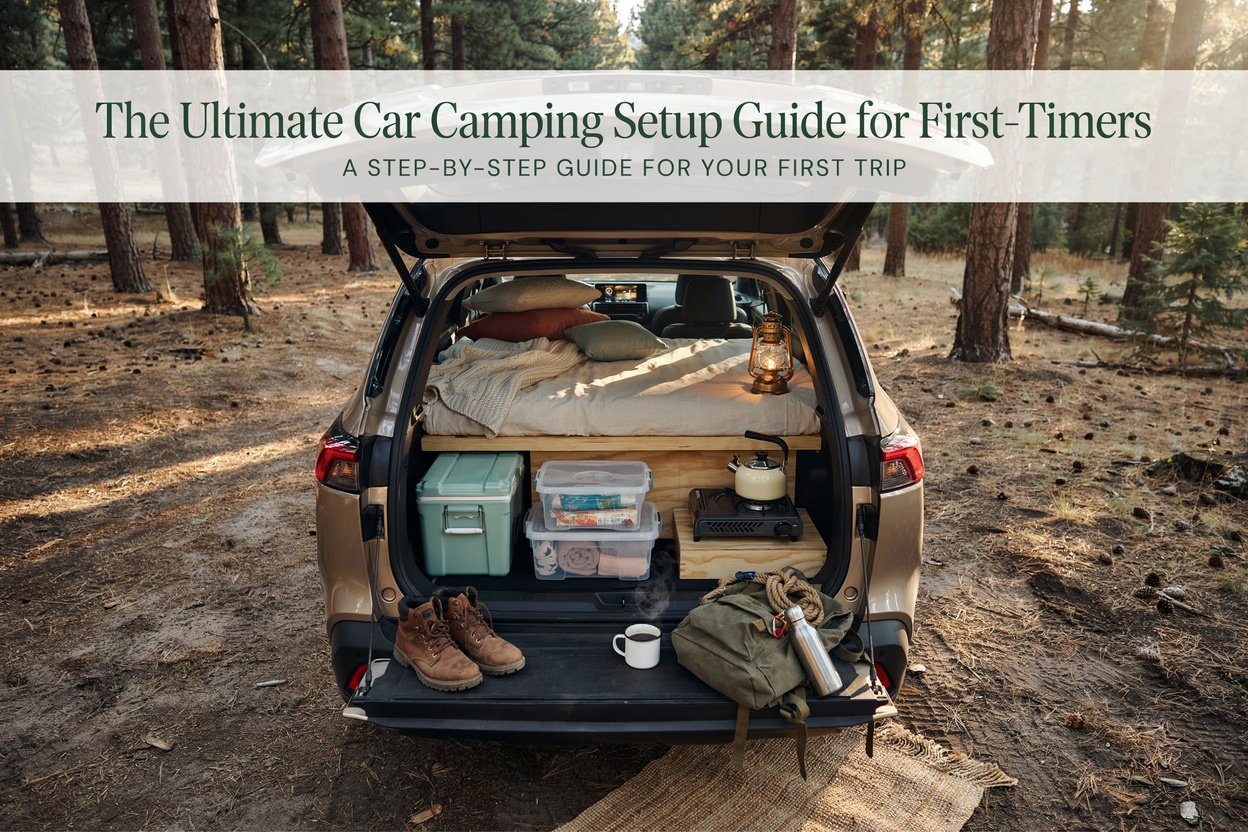
If you’ve been thinking about planning your first car camping adventure but don’t know where to start, this guide walks you through everything you need to create a practical, comfortable setup without wasting money on gear you don’t actually need.
Whether you’re camping in a national park, a campground, or a quiet forest campsite, here’s exactly how to build a beginner-friendly car camping setup you’ll actually enjoy.
Why Car Camping Is Perfect for Beginners
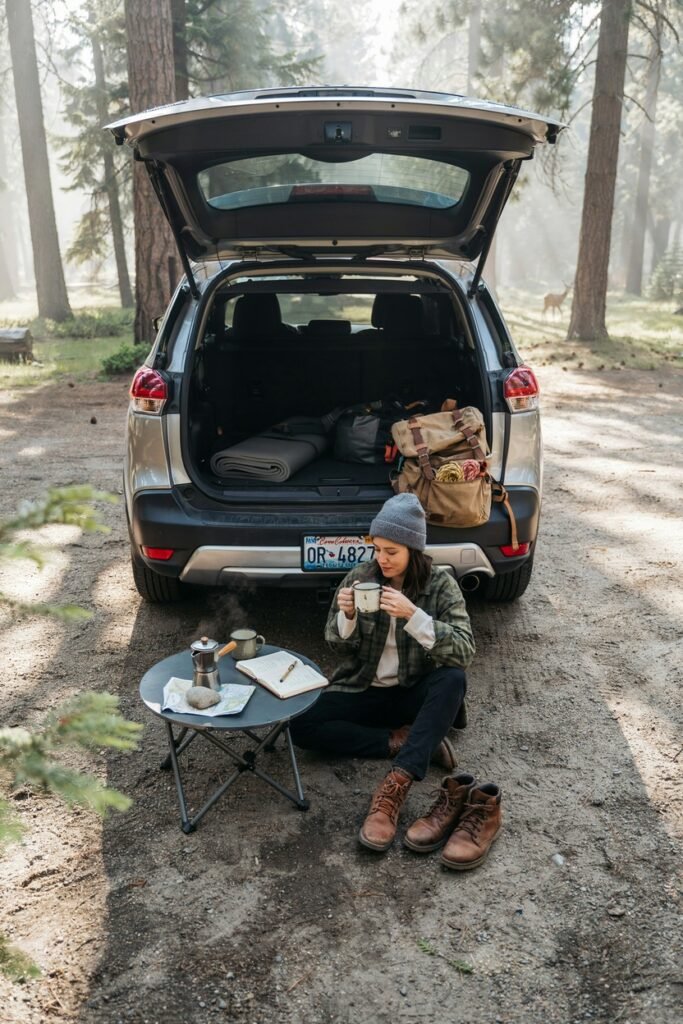
Unlike backpacking, where every ounce matters, car camping gives you much more flexibility.
Since your vehicle is parked at your campsite, you can bring comfortable bedding, larger coolers, proper cooking equipment, folding chairs, and extra clothing without worrying about carrying everything on your back.
That extra comfort makes your first camping trip far more enjoyable and helps you focus on the experience instead of simply trying to survive the night.
Some of my favorite benefits include:
- You can sleep on a real mattress instead of the ground.
- Cooking is much easier with full-sized equipment.
- You have extra clothes if the weather changes.
- Everything stays organized inside your vehicle.
- It’s much more beginner friendly than wilderness backpacking.
- You can slowly upgrade your gear over time instead of buying everything at once.
If you’ve never camped before, this is easily the least intimidating place to start.
Choosing the Right Campsite
One mistake many first-time campers make is choosing the cheapest campsite instead of the most convenient one.
When you’re still learning, having a few extra amenities makes a huge difference.
Look for campgrounds that offer:
- Bathrooms
- Drinking water
- Picnic tables
- Fire rings
- Level parking spaces
- Nearby hiking trails
- Shower facilities if available
A developed campground gives you a safer, more comfortable environment while you gain confidence.
As you become more experienced, you can always explore dispersed camping or more remote locations later.
Decide Where You’ll Sleep
One of the first decisions you’ll make is whether you’ll sleep inside your vehicle or in a tent.
Neither option is right or wrong. It simply depends on your vehicle and your comfort level.
Sleeping Inside Your Car
Many SUVs, hatchbacks, crossovers, and vans provide enough room to sleep comfortably once the rear seats fold down.
Sleeping inside your vehicle offers several advantages:
- Better protection from rain and wind
- Extra warmth on colder nights
- Faster setup and pack up
- Added security
- Less gear to purchase
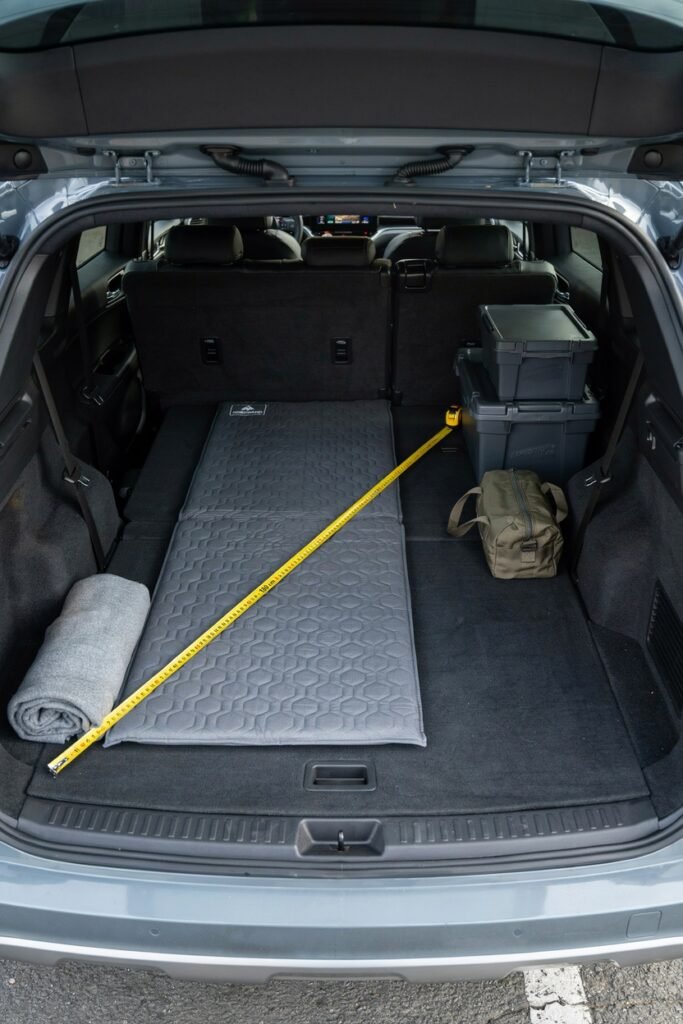
Before your trip, measure the available sleeping space so you know what size sleeping pad or mattress will fit comfortably.
Sleeping in a Tent
If your vehicle is too small, a tent is still an excellent option.
Choose a tent that’s one size larger than you think you need.
For example:
- One person → 2-person tent
- Two people → 4-person tent
- Family of four → 6-person tent
The extra space makes changing clothes, organizing gear, and relaxing much easier.
Look for features like:
- Waterproof rainfly
- Good ventilation
- Aluminum poles
- Interior storage pockets
- Easy 10-minute setup
The simpler the tent is to pitch, the more enjoyable your first camping trip will be.
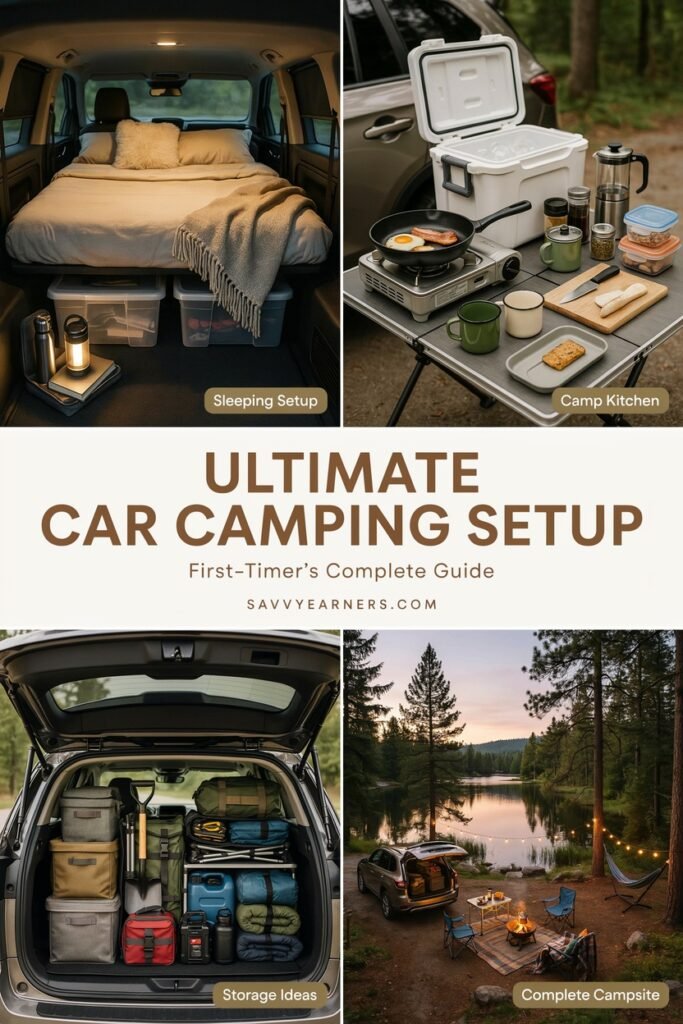
Build a Comfortable Sleeping Setup
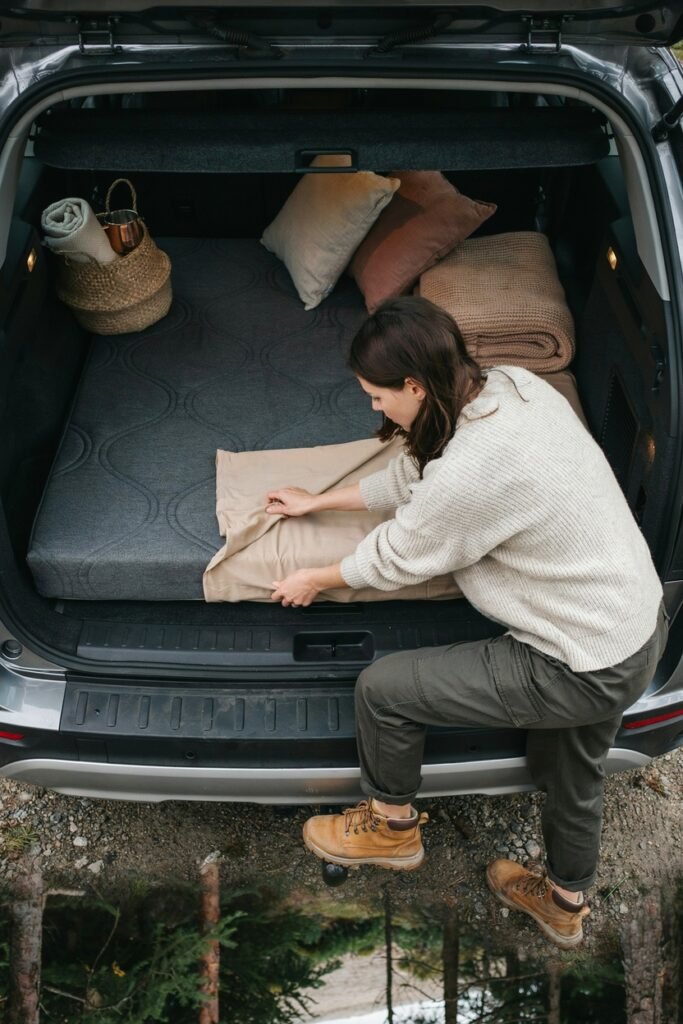
A poor night’s sleep can ruin an otherwise amazing camping trip, so investing in a comfortable sleeping setup is one of the best decisions you can make.
Option 1: Memory Foam Mattress
A folding memory foam mattress offers the closest experience to sleeping in your own bed.
Pros
- Extremely comfortable
- Excellent insulation
- Easy to set up
- Great for SUVs and vans
Cons
- Bulky
- Takes up more storage space
Option 2: Self-Inflating Sleeping Pad
Self-inflating sleeping pads strike an excellent balance between comfort and portability.
They pack down much smaller than foam mattresses while still providing enough cushioning for a good night’s sleep.
Benefits include:
- Quick setup
- Compact storage
- Excellent insulation
- Works inside both tents and vehicles
Look for one that’s at least 3 inches thick if comfort is your top priority.
Option 3: Air Mattress
Air mattresses are affordable and widely available, making them a popular option for first-time campers.
If you choose this option, don’t forget to pack:
- Battery-powered air pump
- Repair patch kit
- Blanket underneath for insulation
Without insulation underneath, air mattresses can become surprisingly cold overnight.
Don’t Forget Warm Bedding
Even during summer, nighttime temperatures can drop far lower than most beginners expect.
A simple bedding system should include:
- Sleeping bag rated for local temperatures
- Soft fitted sheet
- Comfortable pillow from home
- Warm fleece blanket
- Extra throw blanket for unexpected cold weather
One of the best upgrades I ever made was bringing my own pillow instead of using a small camping pillow. It made sleeping outdoors feel much more like sleeping at home.
The Essential Gear You Actually Need
It’s incredibly easy to spend hundreds of dollars on camping gear before your first trip.
The reality is that beginners only need a handful of reliable essentials to enjoy a comfortable weekend outdoors.
Shelter
- Tent (if sleeping outside)
- Ground tarp
- Footprint or groundsheet
- Stakes
- Rubber mallet
Sleeping
- Mattress or sleeping pad
- Sleeping bag
- Pillow
- Blankets
Camp Furniture
- Folding chairs
- Folding table
- Lantern
- Headlamp
Camp Kitchen Basics
- Camp stove
- Fuel canister
- Lighter
- Pot
- Frying pan
- Cooking utensils
- Plates
- Bowls
- Reusable cutlery
- Coffee mug
Starting with these basics keeps your budget under control while ensuring your first camping trip is comfortable and enjoyable.
How to Build the Perfect Camp Kitchen
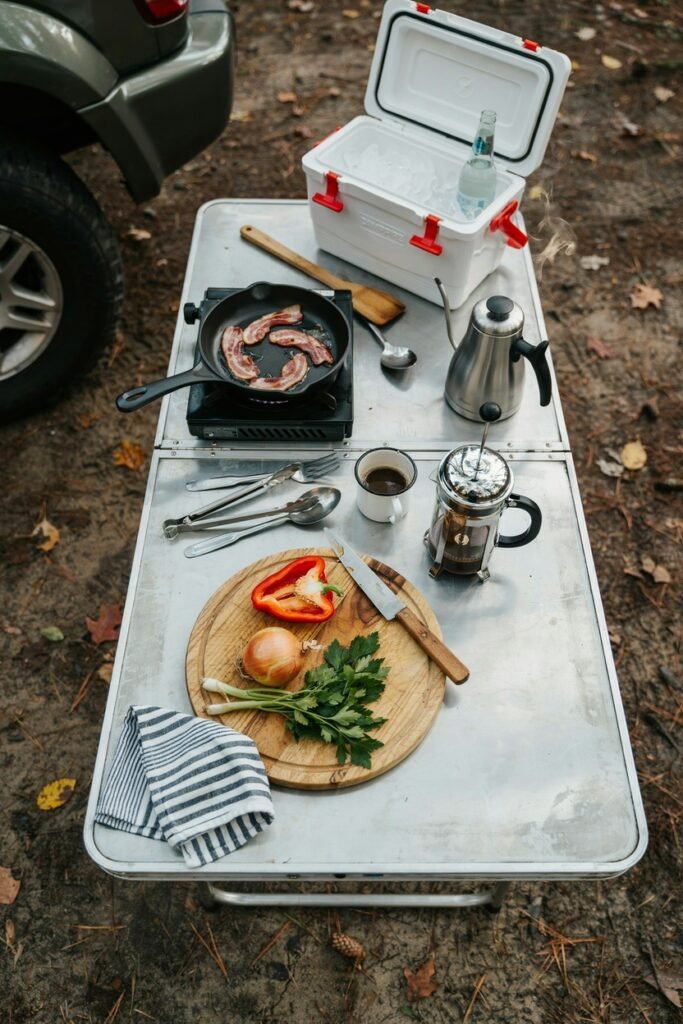
One of the biggest advantages of car camping is being able to cook real meals instead of surviving on granola bars and instant noodles.
A simple camp kitchen doesn’t need to be expensive. In fact, most beginners can put together everything they need with a few affordable essentials.
Choose a Reliable Camp Stove
A portable propane stove is the easiest option for first-time campers.
Single-burner stoves are lightweight and great for solo campers, while two-burner models make it much easier to cook breakfast, boil water, or prepare dinner for multiple people.
Always bring an extra propane canister. Running out of fuel halfway through cooking dinner is one of those mistakes you’ll only make once.
Pack Basic Cooking Equipment
You don’t need an entire kitchen cabinet.
These essentials will cover almost every meal:
- Frying pan
- Medium saucepan
- Sharp knife
- Cutting board
- Wooden spoon
- Spatula
- Tongs
- Can opener
- Mixing bowl
- Measuring cup
- Aluminum foil
- Zip-top bags
Keeping everything together inside one storage tote makes camp setup much faster.
Don’t Forget Cleanup Supplies
Cleaning up is part of camping, but it doesn’t have to be difficult.
Bring:
- Biodegradable dish soap
- Small wash basin
- Dish sponge
- Microfiber towels
- Trash bags
- Paper towels
- Drying towel
Cleaning your dishes immediately after eating prevents insects from showing up around your campsite.
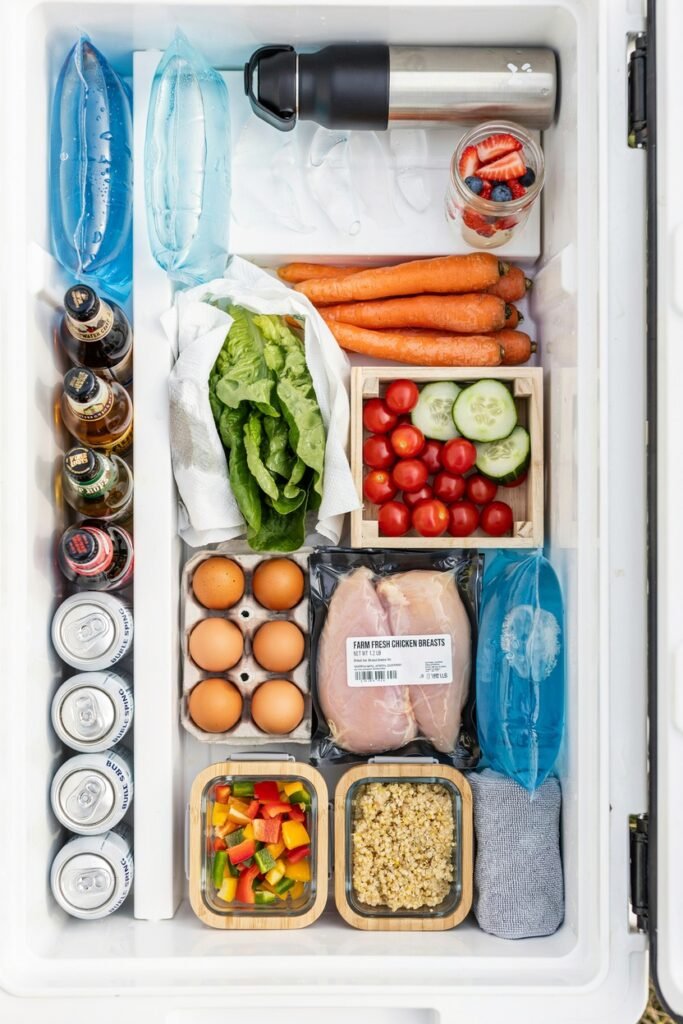
Organizing Your Cooler Like a Pro
A messy cooler quickly becomes frustrating.
Instead of throwing everything inside randomly, organize it in layers.
Bottom Layer
Place frozen water bottles or ice packs on the bottom.
These stay cold the longest and help keep everything else chilled.
Middle Layer
Store raw meat, dairy products, and anything highly perishable here.
Keeping these items in sealed containers also helps prevent leaks.
Top Layer
Place frequently used foods on top, including:
- Drinks
- Sandwich ingredients
- Fruit
- Snacks
- Condiments
This keeps you from digging through melting ice every time you want a drink.
Try to keep your cooler closed as much as possible to help the ice last longer.
Easy Meal Planning for Your First Trip
Complicated meals usually sound great at home but become a hassle at camp.
Simple recipes allow you to spend more time relaxing and less time cooking.
Breakfast Ideas
- Bacon and eggs
- Overnight oats
- Breakfast burritos
- Yogurt with granola
- Pancakes
Lunch Ideas
- Sandwiches
- Wraps
- Pasta salad
- Fresh fruit
- Trail mix
Dinner Ideas
- Grilled burgers
- Hot dogs
- Chicken fajitas
- Foil packet meals
- Chili
Snacks
Keep plenty of quick snacks available between hikes.
Good options include:
- Beef jerky
- Mixed nuts
- Granola bars
- Apples
- Bananas
- Crackers
- Cheese sticks
Planning meals before your trip also helps prevent overpacking food that never gets eaten.
Create a Comfortable Campsite Layout
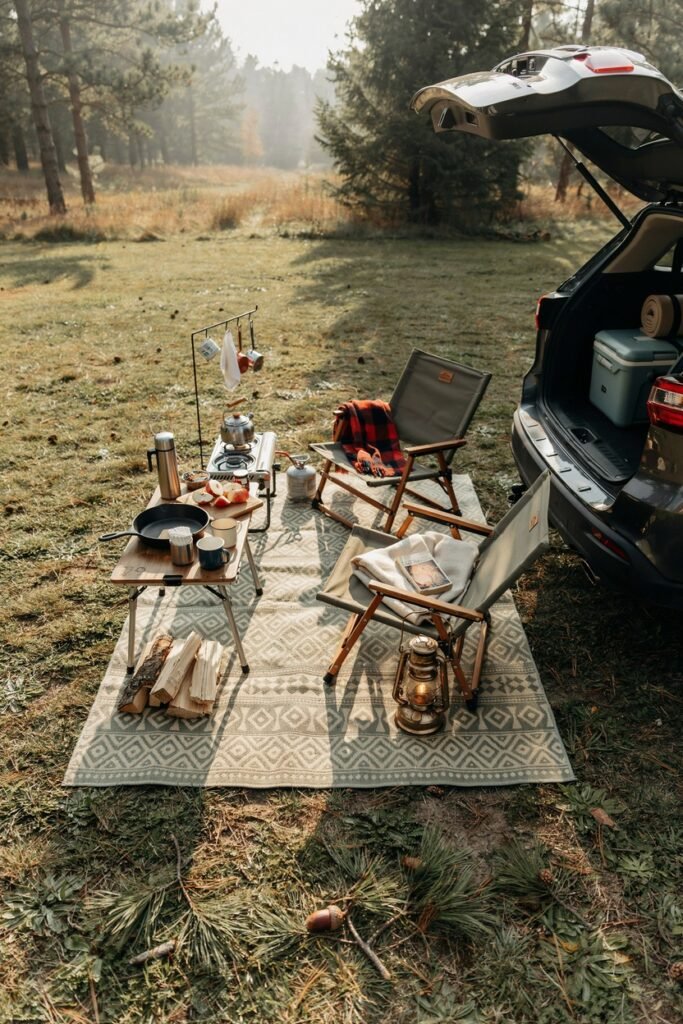
A well-organized campsite makes everything easier.
Instead of setting gear down wherever there’s space, divide your campsite into simple zones.
Sleeping Area
Whether you’re sleeping inside your vehicle or a tent, keep this area clutter free.
Store only your bedding, flashlight, phone, and overnight essentials nearby.
Cooking Area
Set up your camp stove on a sturdy table away from your sleeping area.
Keep cooking equipment, cooler, and food storage together so you aren’t constantly walking back and forth.
Relaxation Area
Arrange your camp chairs around the fire pit or picnic table.
This quickly becomes the social center of your campsite where you’ll eat, relax, and enjoy the evening.
Storage Area
Keep larger totes, extra supplies, firewood, and emergency equipment together in one location.
A little organization goes a long way toward making camp feel surprisingly comfortable.
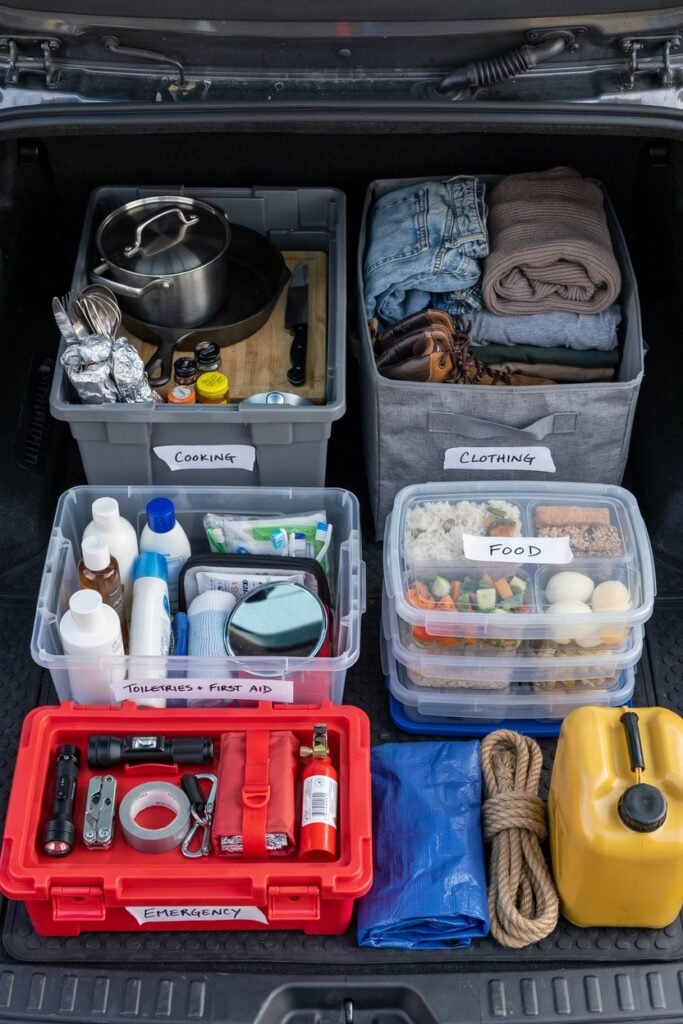
Stay Organized with Storage Bins
One of the easiest ways to simplify car camping is by using clear plastic storage bins.
Instead of searching through loose bags, dedicate one bin to each category.
For example:
Kitchen Bin
- Cookware
- Plates
- Utensils
- Dish soap
- Spices
Food Bin
- Dry food
- Snacks
- Coffee
- Cooking oil
- Paper products
Gear Bin
- Lanterns
- Headlamps
- Batteries
- Rope
- First aid kit
- Multi-tool
Labeling each container makes packing and unpacking much quicker, especially after several camping trips.
By the time you’ve organized your kitchen, food, and campsite, you’ll already feel far more confident than most first-time campers.
Next, we’ll cover safety essentials, lighting, staying comfortable in different weather conditions, common beginner mistakes, frequently asked questions, and the final tips that make every car camping trip more enjoyable.
Car Camping Safety Essentials
One of the best things about car camping is that help is usually much closer than it would be on a backpacking trip. Even so, it’s important to prepare for the unexpected.
A few simple safety items can make a huge difference if something doesn’t go according to plan.
Pack a First Aid Kit
Every car camping kit should include a basic first aid kit.
Make sure it contains:
- Adhesive bandages
- Sterile gauze pads
- Medical tape
- Antiseptic wipes
- Antibiotic ointment
- Tweezers
- Pain relievers
- Allergy medication
- Blister treatment
- Small scissors
Check your supplies before every trip and replace anything that’s expired or has been used.
Bring Emergency Supplies
Even if you’re camping at a developed campground, it’s smart to have a few backup items.
Consider packing:
- Flashlight
- Extra batteries
- Portable power bank
- Multi-tool
- Emergency blanket
- Duct tape
- Fire starter
- Extra drinking water
- Paper map of the area
Hopefully you’ll never need them, but you’ll be glad you packed them if you do.
Know the Weather Forecast
Weather can change quickly, especially in the mountains.
Before leaving home:
- Check the forecast.
- Look for severe weather alerts.
- Know sunset times.
- Plan for colder nighttime temperatures.
It’s always better to pack one extra warm layer than wish you had.
Lighting Your Campsite
Good lighting makes your campsite safer and much more enjoyable after dark.
Instead of relying on your phone flashlight, bring multiple light sources.
Lantern
A rechargeable LED lantern provides excellent area lighting for cooking, eating, and relaxing around camp.
Place it on your picnic table or hang it from a nearby tree branch.
Headlamp
A headlamp quickly becomes your favorite piece of camping gear.
Because it leaves both hands free, it’s perfect for:
- Cooking after sunset
- Walking to the restroom
- Setting up camp
- Packing your vehicle
- Reading inside your tent
Always keep it within reach before going to bed.
String Lights
Battery-powered string lights aren’t necessary, but they make your campsite feel warm and inviting.
They’re also surprisingly helpful for finding your campsite after dark.
Dressing for Changing Weather
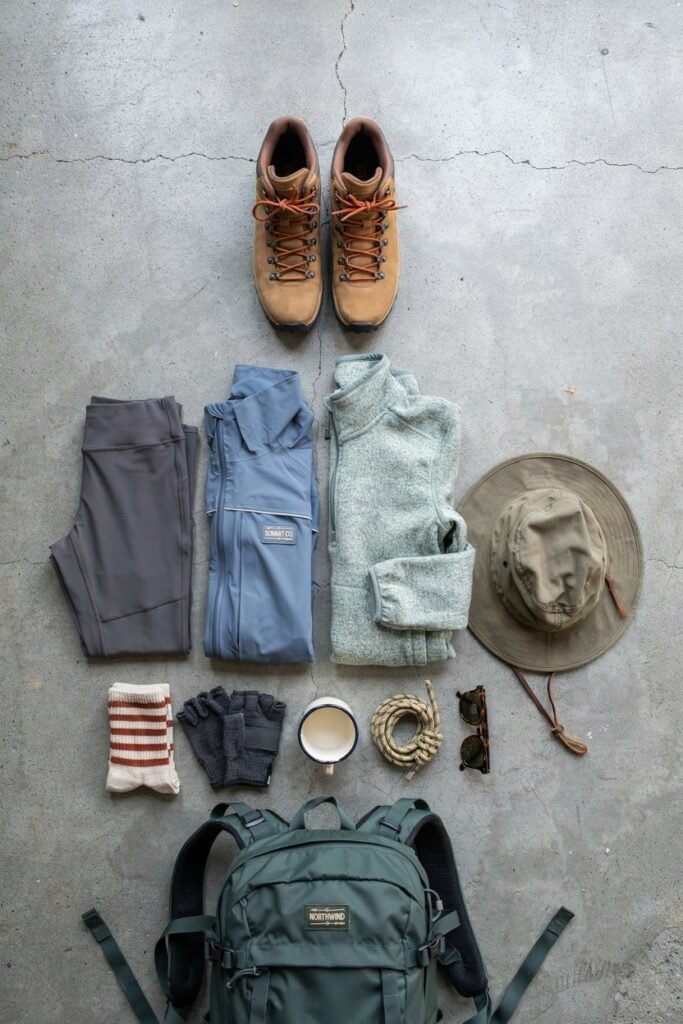
One mistake almost every beginner makes is packing for daytime temperatures only.
Even warm summer days can turn surprisingly cool after sunset.
The easiest solution is dressing in layers.
Base Layer
Choose moisture-wicking clothing that keeps sweat away from your skin.
Avoid cotton if possible, especially in cooler weather.
Mid Layer
A lightweight fleece or hoodie provides warmth during chilly mornings and evenings.
Outer Layer
Always pack a waterproof rain jacket, even if rain isn’t in the forecast.
Weather changes quickly outdoors, and staying dry is one of the biggest factors in staying comfortable.
Common Car Camping Mistakes to Avoid
You don’t need years of camping experience to have an enjoyable trip.
Most problems come from a handful of common beginner mistakes.
Packing Too Much
It’s tempting to bring everything you own.
Instead, focus on quality essentials.
After every trip, you’ll naturally figure out what you actually use and what can stay home next time.
Arriving After Dark
Setting up your campsite in the dark is stressful, especially if it’s your first trip.
Plan to arrive with at least two hours of daylight remaining.
You’ll have plenty of time to:
- Pitch your tent
- Organize your campsite
- Cook dinner
- Explore the area
Forgetting Extra Water
Always pack more drinking water than you think you’ll need.
Water is useful for:
- Drinking
- Cooking
- Washing dishes
- Cleaning hands
- Emergency situations
Running out is one of the easiest camping mistakes to avoid.
Leaving Food Outside
Food left on picnic tables attracts unwanted visitors.
Always store food inside your vehicle or in designated bear lockers if they’re provided.
Even small animals like raccoons and squirrels can make quite a mess overnight.
Buying Expensive Gear Too Soon
Many beginners spend hundreds of dollars before discovering whether they even enjoy camping.
Start with affordable, reliable equipment.
As you gain experience, you’ll know exactly which upgrades are worth investing in.
Frequently Asked Questions
Is car camping good for complete beginners?
Absolutely. Car camping is one of the easiest ways to experience the outdoors because your vehicle stays close by, allowing you to bring comfortable gear without worrying about carrying everything.
Can I sleep in my car overnight?
In many campgrounds, yes. Always check the campground rules before your trip, as regulations vary depending on the location.
What size vehicle works best?
SUVs, crossovers, hatchbacks, vans, and trucks all work well. Larger vehicles simply provide more sleeping and storage space.
How much should I budget for my first setup?
A comfortable beginner setup can usually be put together for a few hundred dollars if you shop carefully and avoid buying unnecessary gadgets.
Do I need a campground reservation?
For popular parks and campgrounds, yes. Many locations fill up weeks or even months in advance, especially during summer weekends.
Final Thoughts
Your first car camping trip doesn’t have to be perfect.
You don’t need an expensive rooftop tent, thousands of dollars in gear, or years of outdoor experience to enjoy a weekend away.
A comfortable place to sleep, a simple camp kitchen, a few safety essentials, and a well-organized campsite are more than enough to create an unforgettable experience.
The best part about car camping is that every trip teaches you something new. You’ll quickly discover which gear you use the most, what you can leave at home, and the small upgrades that make each adventure even more comfortable.
Don’t wait until you have the “perfect” setup. Start with the basics, head outdoors, and build your dream car camping setup one trip at a time.